
 See Our Latest Article on HelloNation
What is the Graston Technique?
The Graston Technique is a form of instrument-assisted soft-tissue mobilization, often abbreviated as IASTM. It uses smooth, specialized tools to assess and treat muscles, tendons, ligaments, and fascia—the connective tissue surrounding muscles and other structures.
During treatment, a trained clinician glides the instrument over selected areas with controlled pressure. The goal is not to “scrape” tissue or break up scar tissue by force. Instead, the technique is used to identify areas of altered tissue sensitivity or movement and to provide a targeted form of manual therapy.
The method may be included in chiropractic care for musculoskeletal complaints such as stiffness, restricted movement, overuse discomfort, or recovery after a strain. It is generally one part of a broader plan that may also include exercise, mobility work, ergonomic changes, and gradual return to activity.
How does it work?
The tool provides a firm edge that can help the clinician feel differences in tissue texture and glide. Treatment may create temporary redness or mild bruising because the skin and underlying tissues are being mechanically stimulated.
Some proposed effects involve changes in local circulation, pain sensitivity, and the way tissues move relative to one another. However, explanations that describe the technique as physically removing adhesions or “breaking up” scar tissue should be treated cautiously. Current research does not establish one simple mechanism that explains all reported benefits.
A systematic review of IASTM studies found promising findings for some pain, function, and range-of-motion outcomes, but also noted limitations such as small studies, inconsistent treatment methods, and a high number of case reports. More recent reviews continue to describe the evidence as mixed rather than conclusive. ([pmc.ncbi.nlm.nih.gov](https://pmc.ncbi.nlm.nih.gov/articles/PMC6709755/?utm_source=openai))
What conditions may it help?
Graston-style treatment may be considered when soft-tissue sensitivity or limited mobility appears to contribute to a person’s symptoms. Examples can include:
- Muscle strains and post-activity soreness
- Tendon-related pain, such as discomfort associated with repetitive loading
- Reduced range of motion after periods of limited activity
- Scar-related restrictions after an appropriately healed injury
- Stiffness affecting the shoulder, elbow, wrist, hip, knee, ankle, or foot
- Certain work-related or recreational overuse problems
The technique is not appropriate for every cause of pain. For example, symptoms caused by a fracture, infection, significant nerve compression, blood clot, systemic illness, or major joint instability require a different evaluation. Pain that is severe, rapidly worsening, associated with unexplained swelling, or accompanied by weakness or loss of sensation should not be managed solely with soft-tissue treatment.
What happens during a typical session?
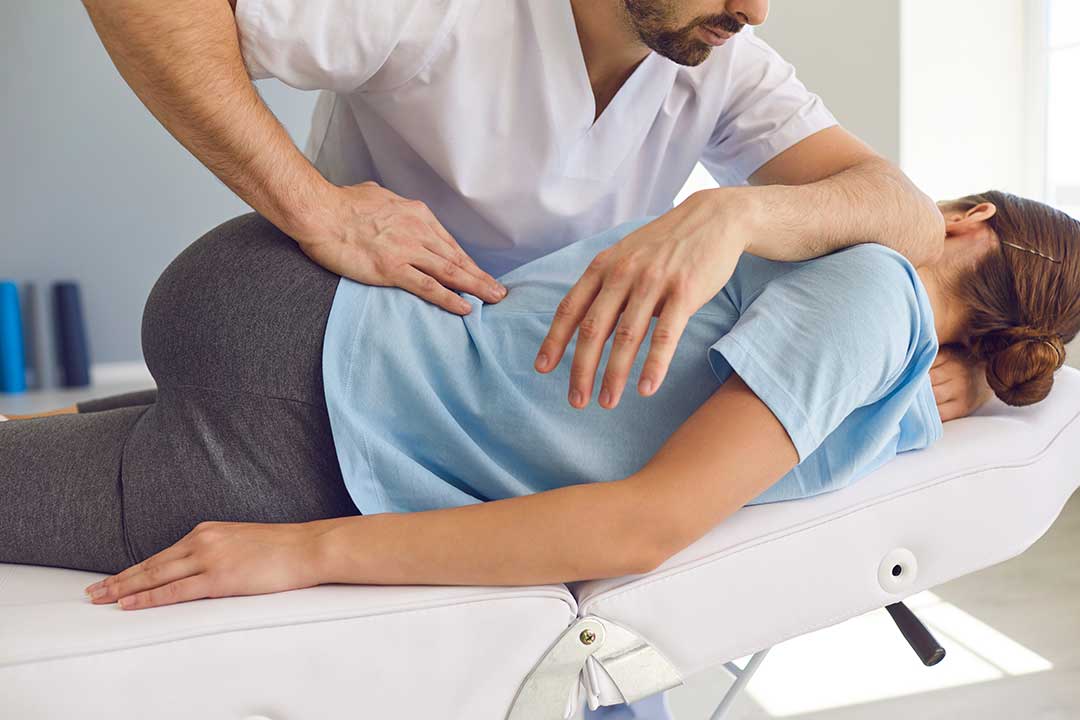
A responsible evaluation should occur before an instrument is used. The clinician may ask about the location and behavior of symptoms, recent injuries, medications, medical conditions, activity demands, and previous surgery.
The treatment area is usually exposed, and a small amount of lotion or another appropriate medium may be applied. The clinician then uses the instrument with short or sweeping strokes, adjusting pressure according to the tissue response and the person’s tolerance.
Treatment may feel like firm rubbing, pressure, pulling, or mild discomfort. It should not feel like sharp, burning, electric, or unbearable pain. The treated area may appear pink or red afterward. Mild tenderness can occur for a day or two, although extensive bruising or worsening pain should prompt reassessment.
A session may be followed by active movement, stretching, strengthening, or guidance on gradually resuming normal activities. Passive treatment alone is less likely to address the strength, coordination, workload, or movement habits that contributed to the problem.
Does it hurt, and can it cause bruising?
Mild discomfort is possible, but intense pain is not a sign that treatment is working better. Temporary redness or bruising can occur, particularly when the tissue is sensitive or the pressure is excessive. The amount of visible skin change should not be used as a measure of treatment success.
People in North Greenbush may notice soft-tissue complaints during seasonal transitions, especially when spring yard work, summer recreation, autumn maintenance, or winter snow-related tasks require sudden increases in lifting, gripping, bending, or walking. In those situations, pacing and gradual conditioning are often as relevant as any hands-on technique.
Who should avoid or postpone treatment?
Safety depends on the person’s health history and the condition of the tissue. A recent consensus review identified multiple precautions and contraindications for IASTM, including situations involving impaired blood clotting, active infection, open wounds, certain vascular conditions, unstable fractures, and other medical concerns. ([pubmed.ncbi.nlm.nih.gov](https://pubmed.ncbi.nlm.nih.gov/40150492/?utm_source=openai))
Extra caution or medical clearance may be appropriate for people who:
- Take anticoagulant or antiplatelet medication
- Have a bleeding or clotting disorder
- Have active skin disease, infection, or an unhealed incision
- Have fragile skin or significantly reduced sensation
- Have a suspected fracture or acute traumatic injury
- Have a history of blood clots or serious vascular disease
- Are receiving cancer treatment or have a condition affecting tissue healing
- Are pregnant and need treatment near sensitive areas or for a new, unexplained symptom
A clinician should also know about recent surgery, injections, unexplained bruising, and medications that affect healing or bleeding. The appropriate response may be to modify the treatment, avoid the area, or postpone IASTM entirely.
Is Graston Technique better than regular massage or chiropractic adjustment?
There is no universal answer. Graston Technique, massage, joint mobilization, spinal manipulation, exercise therapy, and other approaches act through different methods and may be selected for different findings.
Research comparing IASTM with other treatments has not shown that it is consistently superior for every condition. Benefits, when present, may be short-term or may depend on combining hands-on care with progressive exercise. The most useful question is whether the treatment supports measurable goals such as improved movement, walking tolerance, lifting capacity, or reduced activity-related pain.
It should also be understood that the Graston Technique does not replace medical diagnosis. A tool cannot determine the exact cause of pain by itself, and treatment should not delay evaluation of symptoms that suggest a more serious problem.
What questions should residents ask before treatment?
Before beginning, it is reasonable to ask:
- What condition is being treated, and what findings support that plan?
- What changes should be expected after one or several sessions?
- How will progress be measured?
- What exercises or activity changes are part of the plan?
- What side effects are possible?
- Are medications or medical conditions a reason to modify treatment?
- What symptoms would mean the treatment should stop or be reconsidered?
Clear answers help distinguish a carefully integrated therapy from a procedure presented as a cure-all. For most soft-tissue complaints, recovery also depends on sleep, workload, strength, mobility, and a gradual return to normal activity.
